Haystacks – in the footsteps of Wainwright

Haystacks – in the footsteps of Wainwright

At first sight, at some 600 metres and surrounded by some of the highest Lakeland peaks, Haystacks looks, in the words of the great writer of Lakeland walks Alfred Wainwright, ‘like a shaggy terrier in the company of foxhounds’.

However the mountain was one of Wainwright’s absolute favourites: ‘Not one of this distinguished groups of mountains can show a greater variety or or more fascinating arrangement of interesting features.’ We had wanted to climb it for many years, and last week at last got the opportunity to do so.

We had stayed the night before in Carlisle and didn’t start the walk until just before noon, which was just as well because the weather had been temperamental. The first shower hit after 20 minutes and others followed, though fortunately the wind was behind us. We managed to picnic in the lee of a large rock before a lull in the rain gave us the courage to attack the final climb.

After a relatively simple approach, the climb to the top was surprisingly challenging, with several pleasant scrambles up rock faces. However the views just got better and better, and by now the rain had more or less relented and the clouds were starting to lift from the surrounding peaks. Here is the view towards Buttermere and Crummock Water.

By the time we reached the summit there was even a patch of sunshine on the delightfully named Robinson, while Great Gable and Pillar briefly appeared out of the clouds ahead of us and we could look down over Ennerdale water. We were by now entirely convinced by Wainwright’s belief that this is one of the best climbs in the Lake District.

One of the many delights of Haystacks is the small tarn at the summit. As Wainwright said: ‘For a man seeking to get a persistent worry out of this mind, the top of Haystacks is a wonderful cure.’

We decided against going down the way we had come up, and instead descended to Innominate Tarn, where Wainwright’s ashes were scattered, and from there worked our way round to the river coming down from Brandreth. Following the previous day’s heavy rain, the expected stepping stones had disappeared under a raging torrent, and the crossing might well have been beyond us but for a helpful guide who told us where best to put our feet and hauled us up on the other side. The adrenaline buzz was worth the wet feet.

The rest of the descent was straightforward. All in all, it’s a wonderful circuit, with none of those tedious stretches you can meet on mountain walks, a new and often stunning view around every corner and no little excitement as well. As Wainwright said, ‘Could you wish a better place?’

You can listen to Wainwright talking about Haystacks here. He describes the walk in his book Western Fells or you can follow it here.

A review of 2016

Looking back, 2016 has been a rum old year. Politically we’ve had to endure Brexit while the rest of the world has had to endure Putin, Erdogan, Assad and now the prospect of Trump. Musically we have lost Leonard Cohen and David Bowie, two of my musical touchstones, as well as Prince, George Michael and a host of others. And personally, we have lost two good friends, people we won’t be able to replace.

So what was good about the year? Well, ironically, my favourite album of the year was David Bowie’s ‘Black Star’, released a couple of days before he died. Indeed, it has replaced Heroes as my favourite of all Bowie albums. As with all his best work, it’s challenging, innovative and musically stunning. Above all, it’s one of those rare albums where we start with Track 1 and do nothing else until we have reached the end. There has also been good music from Bon Iver, whose third album ’22, A Million’ is another challenging but satisfying listen. Try this. ‘A Moon-shaped Pool’ from Radiohead is also rather good and I enjoyed the debut album from Lanterns on the Lake. We were also able to see a concert from my favourite flamenco guitarist, Vicente Amigo.

I’ve been musically busy as well. My sixth album. ‘The Hills of Arran’ attracted some nice reviews and I also produced videos of the two Spanish-flavoured songs: ‘Andalucia‘ and ‘Santa Maria‘. Finally, there’s a live band version of ‘Ashes and rust’. As well as my usual gigs in the region I also played four small festivals, a gig at the 12 Bar Club and a set in support of Philip Henry and Hannah Martin in the Peak District. And I have been writing lots of new material, some of which we will do on Jan 27th.

Thankyou for your support last year, and here’s wishing you all the very best for the year to come.

Andalucia and Santa Maria

This year it is 40 years since my love affair with Andalucia and its music began. In the summer of 1976 my friend Gordon and I spent six weeks in and around Granada, camping in the Alpujaras and in Motril on the coast, trekking across the Sierra Nevada and exploring the city that was to become one of my very favourite places. I then spent a couple of weeks travelling around Andalucia with another friend, Mike, before I set off alone to cross North Africa and return through Italy. A few years later I returned with Isabelle and we met a flamenco troupe who introduced us to the music of Camarón de la Isla, and notably his remarkable album La Leyenda del Tiempo, generally regarded as a turning point for flamenco and a key moment in reclaiming the music from Franco’s regime.

Since then we have returned on several occasions, most recently two years ago when we visited El Puerto de Santa Maria on the Bahia de Cadiz (staying with our friends Magi and John, alias Zig and Zag), Sevilla (where we caught up with Miguel whose flamenco guitar playing on ‘Andalucia’ is stunning), Cordoba and of course Granada.

My song, Andalucia, was produced by Miguel Moreno who also added additional guitars.:

MezquitaThe video was filmed by John Meed and Isabelle Fournier, including a live performance at the fringe of Folk on the Pier in Cromer in 2016, as well as footage of the Mezquita in Córdoba (right)…

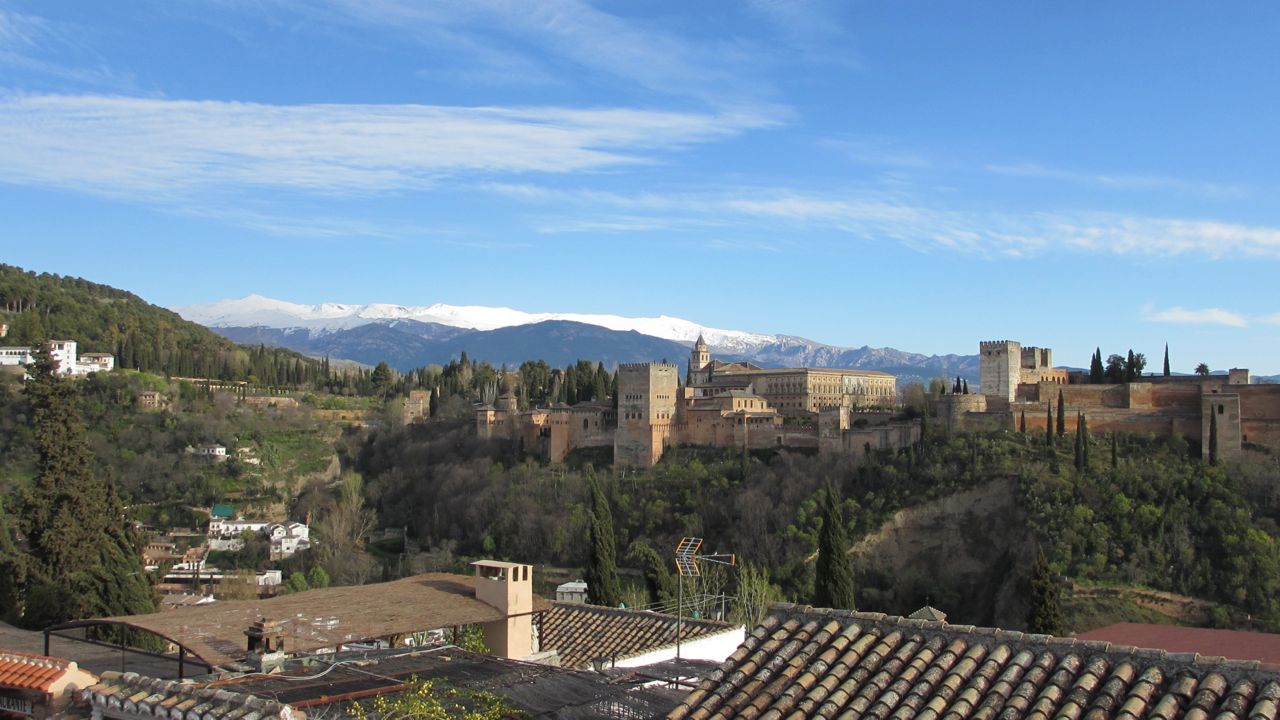
…and the Alhambra in Granada (below).

Alhambra

Our stay in El Puerto resulted in my song Santa Maria and I have now been able to combine film by Roger Murfitt of a live performance of the song with some of the photos and videos of the town that Magi kindly gave me. Here is the the resulting video:

Two minutes in there is an example of the wonderful flamenco baile (dance), we believe from Cadiz-born bailora Begoña Arce, filmed at the peña Tomás el Nitri in El Puerto. The song loosely uses the rhythm of the flamenco tangos – rather different from the Argentinan dance. There’s a more authentic tangos from Camarón himself here (also about the Bahia de Cadiz with a mention of El Puerto towards the end).

Why I’ll be voting to stay in the EU

As the author of Thesalonika, Rue Mouffetard, Poussière d’étoiles, Les enfants de la mer and Andalucia it may not surprise you to know I’ll be voting to remain in the EU.

I don’t want to get into the economic arguments – while I can’t see how leaving would create more decent jobs, trade etc, I’m no economist, and anyway I don’t believe anyone can accurately predict such things – too many other factors in the wider EU and world economy will affect the future. Instead I want to focus on the things we could lose if we walk away – the 4 Ps of peace, people, protection and place.

Peace – It’s not just that, following centuries of conflict between European nations, we have enjoyed 70 years of peace between EU members. Above all, the EU’s regular meetings have provided a forum to resolve differences between member states. The EU has also helped us surmount some major challenges such as the reunification of Germany and the end of the iron curtain. Many on both right and left of the leave campaign want to return to a Europe of nation states, as does Marine Le Pen in France. Such a backwards step is potentially highly dangerous – we are far better off working together.

People – My friends come from across Europe (and of course from far beyond) – from France, Germany, Spain, Sweden, Ireland and Greece as well as Turkey and Russia. Much of my favourite music, art, cinema and literature comes from Spain, France and – in the case of the great Jacques Brel – Belgium. Most of the recipes I cook are from Italy, Greece, France or Spain. I value all these people and their cultures and have no wish to close borders and take a step inwards.

Protection for workers – EU regulations underpin the UK’s health and safety law and oblige employers to take steps to reduce the risks we face at work. The Working Time Directive limits working hours, while EU rules strengthen maternity and paternity benefits and ensure that part time workers get the same rights as full time workers. There’s also protection for consumers as well. And one of the most important aspects of the European community is that all member states are constrained by these regulations – there is reduced opportunity for individual states to undermine these rights in order to gain competitive advantage.

Protection for the environment – OK – the EU’s record on this hasn’t always been good. The early CAP was disastrous for biodiversity – but even that has now greatly improved. Away from this the Habitats Directive 1992, the Birds Directive 2009 and the Natura 2000 ecological network provide enhanced protection to habitats and species, the Environment Action Programme regulates businesses to reduce waste and pollution, and the EU has been a key player in attempts to reduce climate change. Of course, Nigel Farage doubts global warming and hates wind turbines.

Place – We all have the right to travel freely throughout the EU and to live, work or retire where we choose – and we have the right to decent healthcare throughout the EU. And yes, this means that people from other EU countries can travel, live and work here. Good. As John Lennon said, instead of building walls we should be building bridges.

Above all for me the EU represents a way of living that sets a certain benchmark. Things like not resorting to the death penalty, agreeing a Charter of Fundamental Rights and embedding values of human dignity, freedom, democracy, equality, the rule of law and respect for human rights into the EU treaties. I know it’s far from perfect – the treatment of Greece was inhuman (though Yanis Varoufakis nonetheless strongly believes we should stay in). I’m appalled by its policy towards Syrian refugees, and concerned about the rush towards TTIP. However, for many years now the UK has had governments that were even further from perfect – invading Iraq, cutting benefits for the disabled, etc.

It’s up to us to fight for the EU we want. To quote Varoufakis:

‘Britain needs to join the rest of us on the other side of the Channel in the only fight that is worth having: the struggle to democratise the European Union.’

The 12 Bar Club

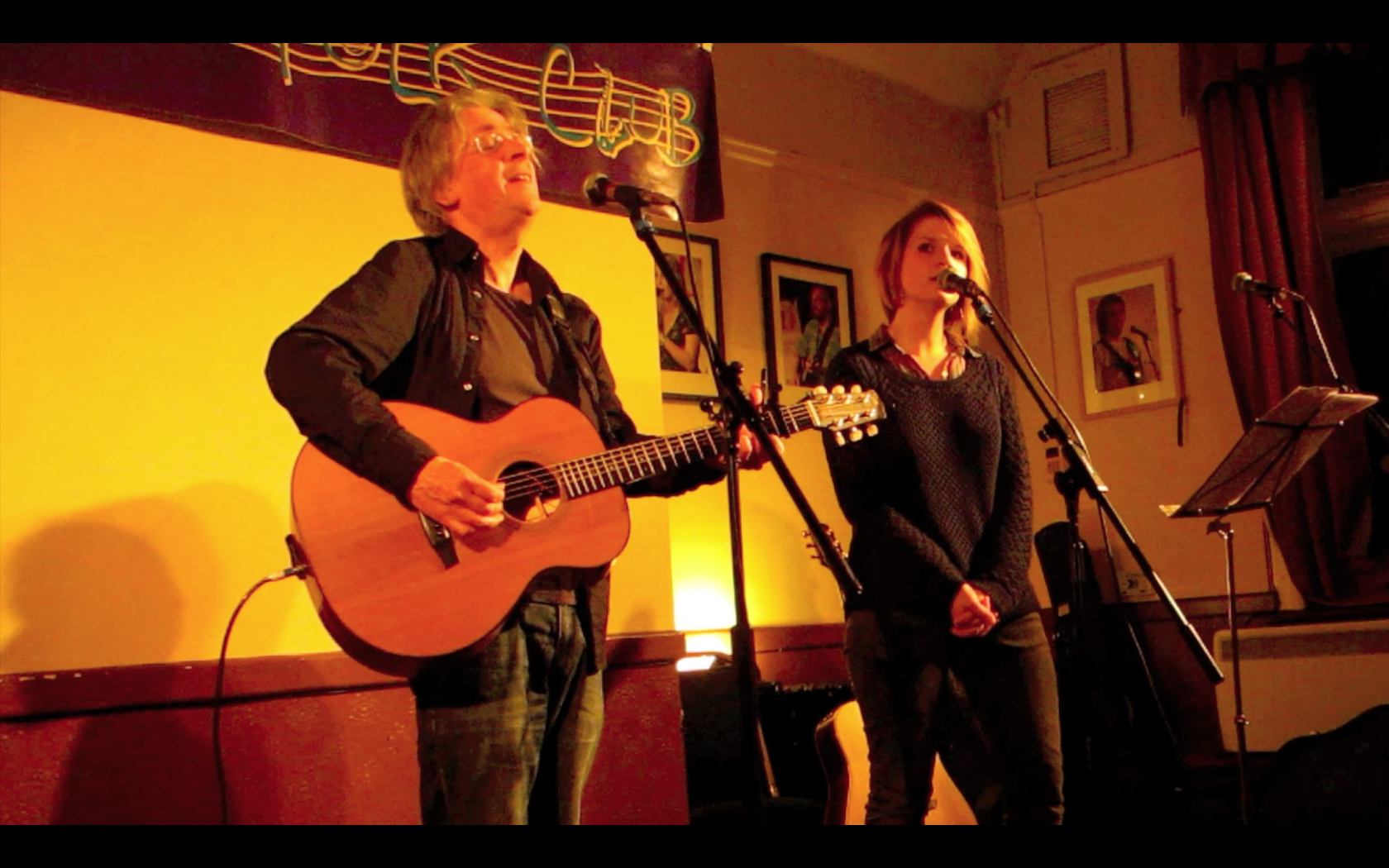
We played a one-hour set at the 12 Bar Cub in its new home of 203 Holloway Road, London N7 8DL on January 31st.

John_Tara_12Bar_hires

The 12 Bar Club is a legendary venue. The original club was founded in Denmark Street in 1994. Jeff Buckley played an impromptu set there before the launch of his debut album Grace. Adele, Martha Wainwright, Joanna Newsom and KT Tunstall all played their first London dates there. Other people who have played the club include Bert Jansch, Nick Harper, The Albion Band, Steve Jones, Boo Hewerdine, Damien Rice, Regina Spektor, The Libertines, Pete Doherty, Keane, Seasick Steve and Gordon Giltrap. When it was threatened with closure more than 25,000 people, including Pete Townshend and Marc Almond signed a petition to keep the club.

The club relocated from Denmark Street to the Holloway Road in 2015 and continued to offer live music most nights, though sadly this venue ceased trading just two days after we played there.

New album The Hills of Arran

My sixth album The Hills of Arran is now available. People who have already had a chance to listen have said ‘the new album is superb’, ‘beautiful and impressively varied in genre and production style’, ‘the more I hear the songs the more enjoyable they are’ and ‘hauntingly beautiful’. A critic from Rock Society has said:

‘The evocative and delicate acoustic performances are a delightful and blessed relief from the current trend for over-produced, overloaded layers of music. A breath of fresh, mellow and unpretentious folk air.’

Cambridge News ran a feature about one of the songs, White crosses. We launched the album at CB2 in Cambridge on Saturday December 5th.

The album was co-produced by Rhys Wilson, who also plays piano and additional guitars. The full track listing is:

1   The Hills of Arran
2   Andalucia
3   Chasing shadows
4   Replacement valve
5   White crosses
6   Remember me?
7   Beautiful people
8   Ashes and rust
9   Santa Maria
10 Muddling through
11 Heroes of the floes
12 The lives of others

Walking in the Hills of Arran

Where no-one was was where my world was stilled
Into hills that hung behind the lasting water (Alastair Reid, ‘Isle of Arran’)

The Hills of Arran is the title track of my next album, due for release on December 5th with a launch event at CB2 in Cambridge that evening. We needed a photo shoot for the cover and some film for the video. We had never been to Arran, and it came with high recommendations, especially from my grandparents. All good reasons to visit the island that is described as ‘Scotland in miniature’.
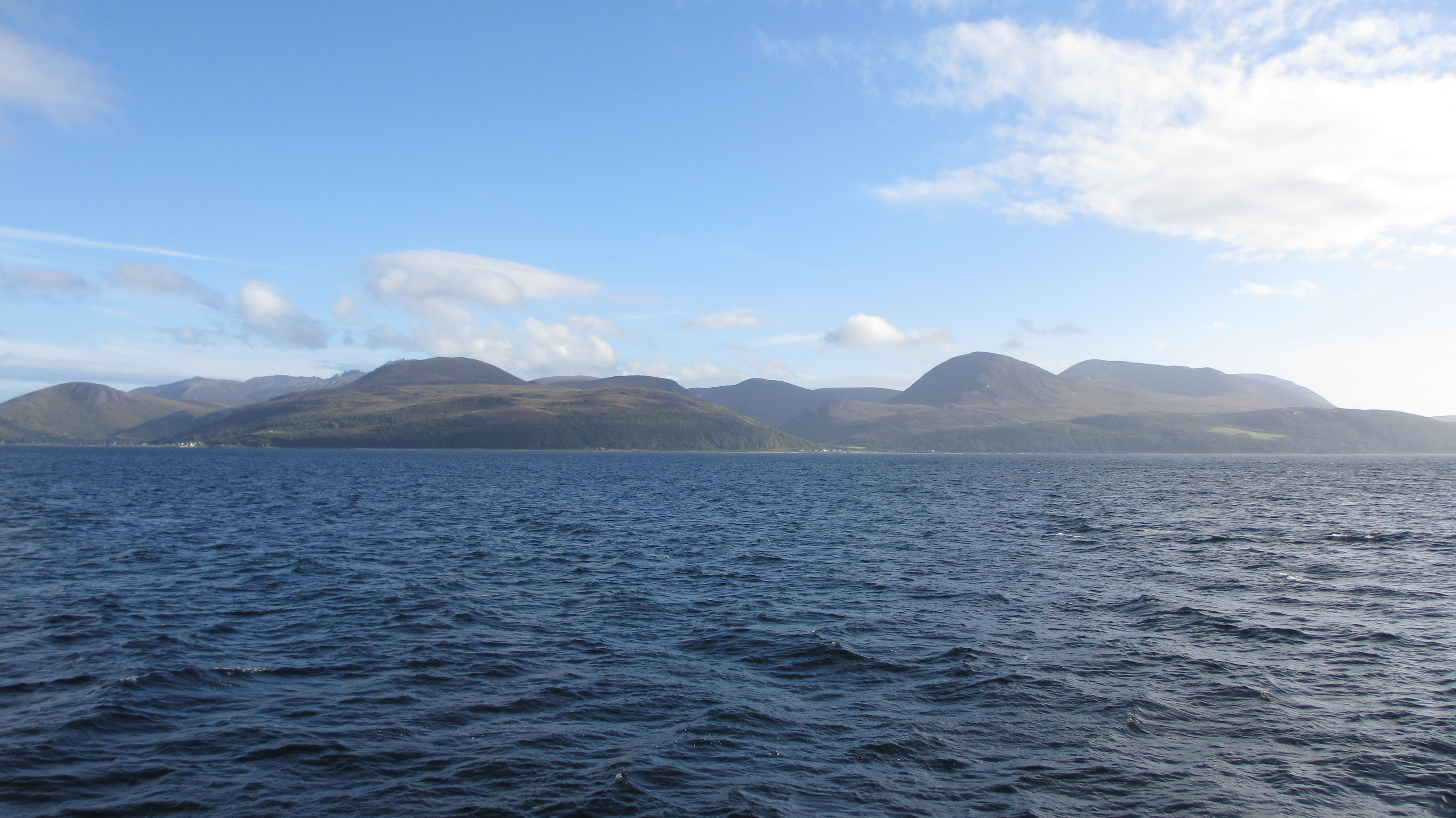
Arran2Our ferry had brought us into Lochranza the day before, and we had stayed just outside Blackwaterfoot on the western coast.

The weather forecast for our first full day was poor, so we decided on a valley walk up Glenrosa rather than risking rain and strong winds on the hills. In the event the rain held off for the morning and we rambled up a classic glacial valley with Goatfell, Arran’s highest peak, on our right.

Arran4

Half way up the valley, the first of two remarkable encounters with wild Arran took place. Two golden eagles soared into view and one came quite close to us as three buzzards also appeared. For a while they soared just under Goatfell together, and then suddenly the eagle tumbled earthwards and seized one of the buzzards by the talons. The buzzard managed to fly off a couple of times but each time the eagle went for it again. The two went to ground and as neither bird flew off again we could only assume that a young and very inexperienced buzzard had become the eagle’s lunch.

After our own rather more vegetarian picnic the rain began, the hills did indeed ‘hang behind the lasting water’ and we turned back, well wet by the time we reached the car, but satisfied to be back in the Scottish hills. That evening we watched the rain pile in across Kilbrannan Sound from Kintyre.

Arran_stonesThe next day we walked along the beach out towards Drumadoon Point, scattering oystercatchers as yet more showers built over the mainland. We continued on to the remarkable stone circles of Machrie Moor – Stonehenge without the crowds, the fences or the A303 and all the more magical for that.

For our final day the weather at last settled down a little. We set off from Thundergay up the hillside towards the delightful Coire Fhionn Lochan.

About half way to the lochan a group of red deer hinds were silhouetted against the distant Sound of Bute.
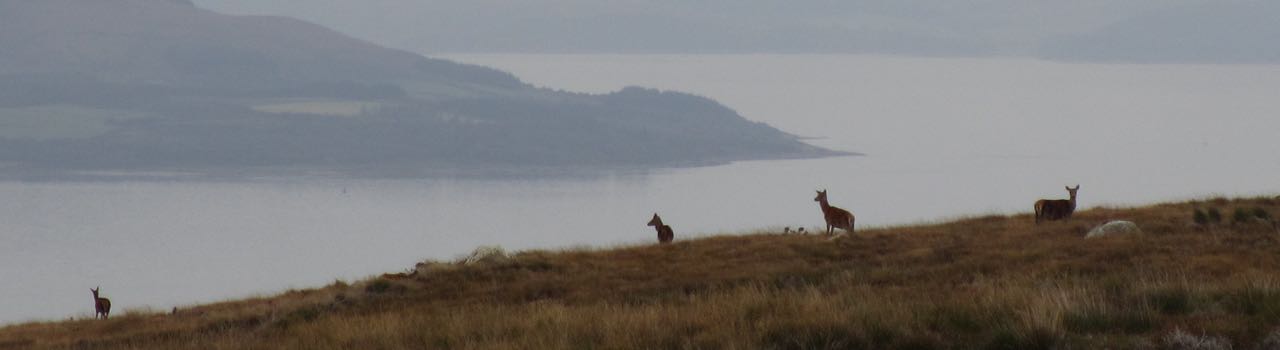
Red deer

Clouds still hung around the hilltops as we reached the lake, Arran1and it would be some time before the sun timidly appeared. Inspired, we set off up the steep slope of Meall Biorach, reaching the first summit just as the mist rolled away from the surrounding hills. As the sun steadily grew in strength, we carried on up Meall Donn, to be treated to magnificent views across the Arran hills and the surrounding mainland.

An eagle flew past us, hugging the ground as it reached a nearby pass before descending into Glen Catacol towards Loch Tanna.

Arran5Heading down towards the other side of the lake we heard a red deer stag roaring and watched as his herd moved up the hill opposite. The early evening light showed the lochan in its full glory.

We were taking a short break walking back down from the lochan when our second remarkable encounter with wild Arran took place. A young meadow pipit flew under our legs and a moment later there was a rush of wind as a female merlin aborted her dive on the pipit. The pipit fluttered out two or three times and each time the merlin attacked again. Eventually another walker went by and the pipit flew off using him as cover. I saw the merlin fly off, apparently with empty talons. We appeared to have saved the pipit but left the merlin hungry.

The following morning we left Arran with heavy hearts. The filming was successful, though, and I’ll post a link to the video as soon as it is available!

Arran3

Concerts with French choir Un Choeur pour Boala

This July we welcomed some very special visitors from Cognac in France. Un Choeur pour Boala (a choir for Boala) stayed with us from July 11th to 18th, and we played three concerts together.

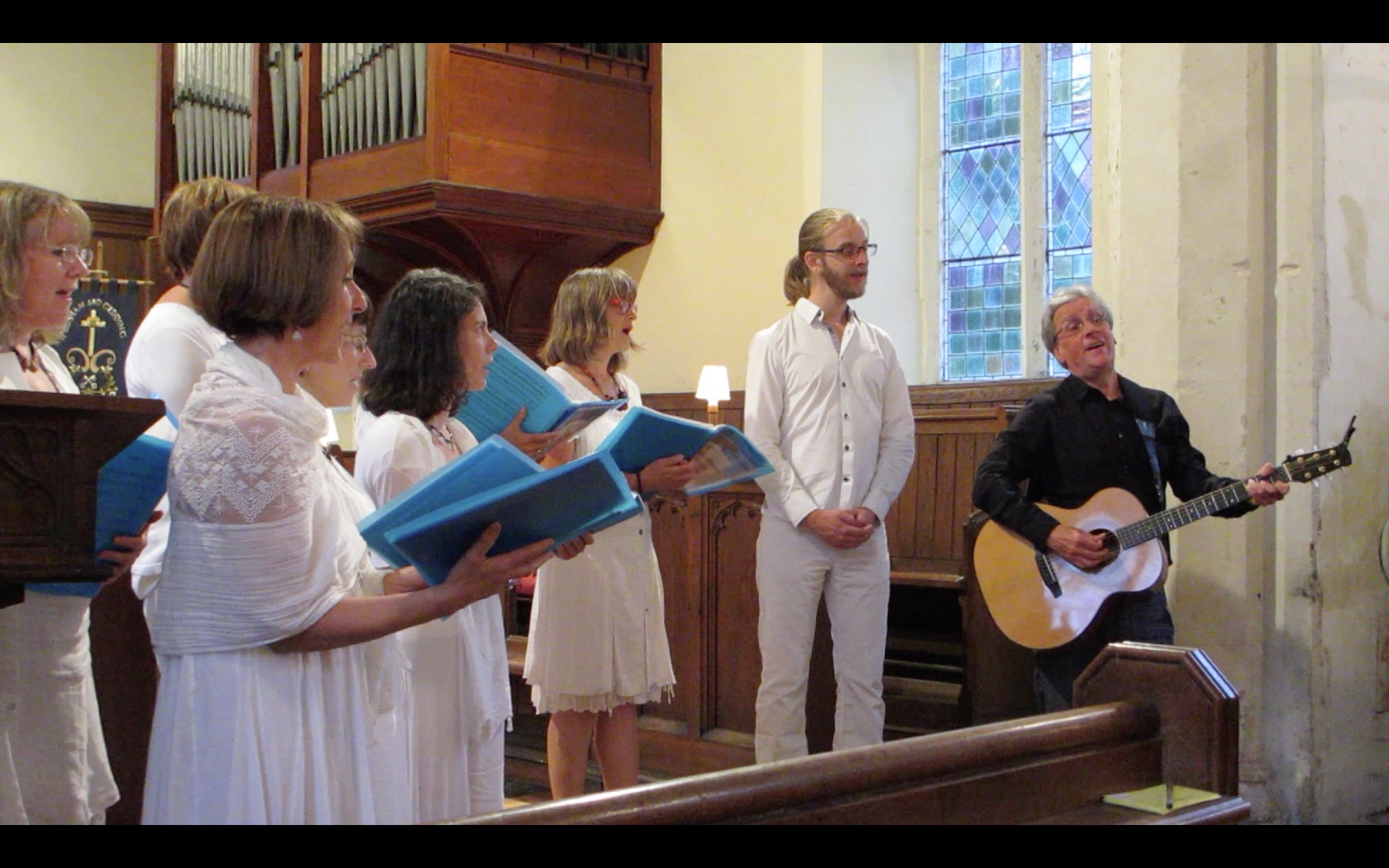
We began on Sunday July 12th in Felsham church, Suffolk, as part of their patronal festival. Here we are singing Thesalonika:

Boala_Felsham

We moved on the following evening to the delightful Kettlebaston church, also in Suffolk:

Boala_Kettlebaston

John_TaraAnd on Friday July 17th at 7.45pm we rounded things off in the Friends Meeting House, 91–93 Hartington Grove, Cambridge CB1 7UB.

I first sang with the choir in July 2011 when they invited me to join them for a concert in the Mynydd Seion Chapel in Abergele in North Wales. Here is a rough recording of us singing Thesalonika together on that occasion:

affiche_generiqueThe choir had formed two years earlier when ten singers from the Cognac Conservatoire de Musique gave a concert in Boala. Moved by the welcome and kindness of the people, they decided to continue singing as a choir in order to raise money for the villages. The money raised from the three concerts will go to the charity Les Amis de Boala which supports projects in the rural community.

The choir’s repertoire includes songs from across the world in a variety of languages and styles which range from traditional Catalan or Jewish pieces to the music of the Beatles and George Gershwin.

Boala is a rural community in Burkino Faso, made up of 16 villages with about 25,000 inhabitants about 150 km north east of Ouagadougou. For a long time it has had very little contact with the outside world. As a result it has kept alive its traditional way of life, its dress, crafts (pottery, basket weaving and ironwork), customs and animist religion. They wish to have more contact with the outside world while keeping their traditions alive and enabling young people to stay in the area.

boala-c0cd9

Cambridge Folk Club’s 50th anniversary

This weekend has seen the celebrations of Cambridge Folk Club’s 50th anniversary. And a very fine weekend it has been.

Back in 1965 the Folk Club got off to an inspired start by inviting a young Paul Simon to play, just as he was releasing his first single, ‘I am a rock’. Since then many of the greats of the folk world have graced the stage, including Show of Hands, Ralph McTell and Waterson Carthy.

However, the club has above all supported local musicians and this was the focus of the weekend’s celebrations. The Friday night got off to a remarkable start with the Inspiration session, where 10 local songwriters – Tom Conway, Liz Cotton, Paul Goodwin, Kevin Hunt, Stella Hensley and Chris Newman, Tony Phillips, Lizzie J. Taylor, Red Velvet and Richard Wildman, and myself – each performed songs by artists who had influenced their own writing, together with their own songs that had resulted from that inspiration. I played Michael Chapman’s Postcards of Scarborough and Clarendon Road in the first half, and Jacque Brel’s The Devil (ca va) and Rue Mouffetard in the second half. As Jim Schwabe from the club said when wrapping up the evening there was not a bad song all night – the quality of the music and the atmosphere through the evening made for one of the best live events I have seen in many years.

A marathon session on the Saturday from 11am to well after 11pm saw 25 local bands and musicians take the stage and illustrate the broad swathe of music that the club chooses to call folk – from traditional songs through country, bluegrass, jazz, blues, rock and pop to covers of The Who! We came during the afternoon – when there was already a packed house – and again in the evening where we were delighted to see our good friends Red House Radio reform for a one-off gig after a break of three years, and were simply blown away by Myke Clifford’s Bophouse Blues.

On a personal level, it has left me reflecting on the huge amount of support the club has given me since I got back into playing music seriously 15 years ago. As they have done with so many other people they nurtured me through the nerves, the inexperience and the false starts of those early days, and have continued to encourage me, even inviting me to support Waterson Carthy. My gigs there remain among the very best and most enjoyable that I play. But above all it is the warmth and friendliness of the club committee that make it one of the very best venues in the country. Thankyou all.

Looking back on 2014

It’s getting to that time of year for reflections on the year almost past.

I’ve really enjoyed the past year musically. My fifth album, The dust of time, received a pleasing amount of radio play, especially on Radio Scotland and Radio Wales. The band and I have been made most welcome at my favourite clubs in Eastern England – Cambridge Folk Club and Royston Folk Club – and I also really enjoyed giving a concert in Felsham Church in Suffolk in July. This autumn I’ve been able to play a couple of songs in especially appropriate places – You and John Peel in The John Peel Centre and a new song, Replacement valve, in my favourite pub in Cambridge, the Flying Pig.

For other people’s music, I’ve recently been bowled over by French singer Maissiat’s Tropiques. Don’t worry if your French isn’t great – the lyrics are almost as impenetrable in their native language, but they don’t half sound good! I have only just discovered The War on Drugs‘ Lost in the Dream. And we’ve still been listening to Daughter’s album If you leave. Finally, if you’ve not yet heard the assured new album by our friends , do have a listen.


Live performance of the year was one of my favourite songwriters, Elvis Costello, playing solo in the Royal Albert Hall – fabulous; closely followed by the remarkable Nicolas from French band Juice who we heard in Nimes sadly the online stuff doesn’t do justice to his astonishing voice). Film of the year for me was Pride and my favourite reading has been by short-story writer Alice Munro, who I have only just discovered. I’ve also been researching the French Revolution – no songs yet, but who knows…

Learners First publications have now published a book of 32 of my song lyrics, drawn from my first five albums and entitled Hold on: Selected lyrics 20014-2014. It is available in three formats, all costing £5:

– Printed edition, 44 pages, fully illustrated in colour – I will have copies at gigs etc. or you can . If you order online you need to pay postage, but you get a free download of Rue Mouffetard!


– There is also a fully illustrated ebook edition on the Apple ibooks store. This version additionally contains links to songs and videos.

– There is an unillustrated Kindle edition from Amazon.

Thankyou again for your support through the year. I’ll leave you in peace for a while, so I’ll take this rather early opportunity to wish you all the best for 2015.