
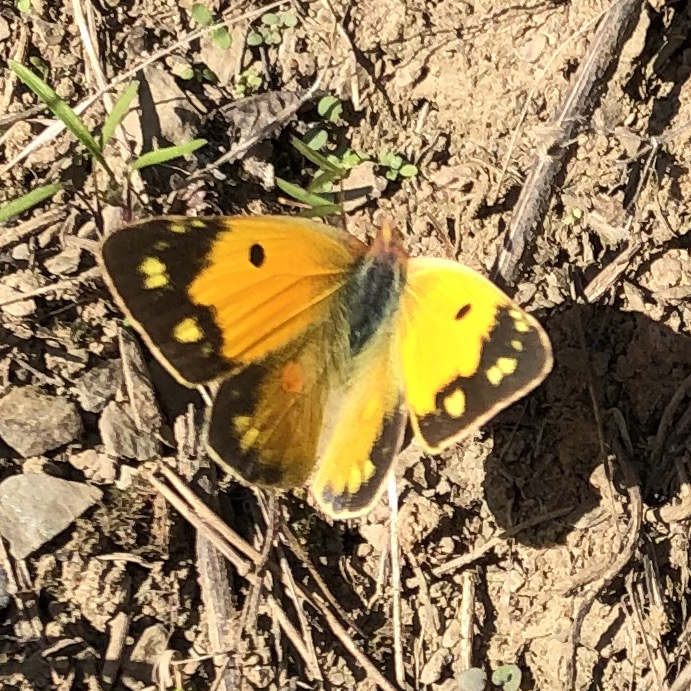
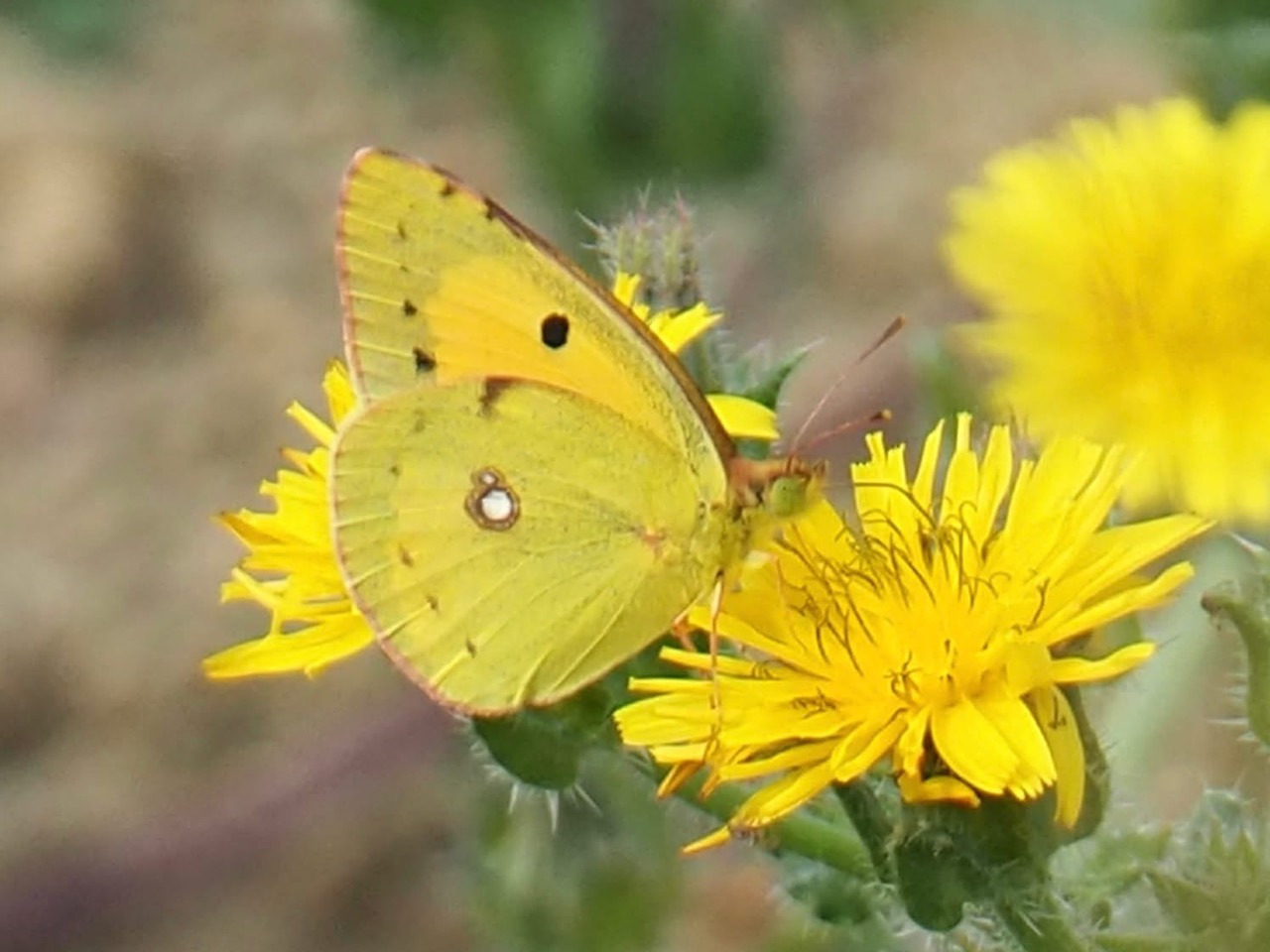
 The first flash of gold flew by on the morning of July 30th 2026. We were just back from a stay in southern France, and I was standing in the grassy southern bank of Addenbrookes Road. In the fields around La Llagone in the eastern Pyrenees we had already seen good numbers of clouded yellow butterflies, but this was the first of the year in my study area around Nine Wells, just south of Cambridge.
But it wasn’t to be the last. I saw two more that day and, as warm, dry weather continued, three more on different occasions through August, and four more in early September. With another spell of warm weather numbers started to climb: on the 21st I recorded 5, and the following day 7, all in or around a patch of grass and lucerne just south of the Nine Wells local nature reserve. Lucerne is one of the species’ favourite larval food plant, and it seems highly likely that the previous generation had laid their eggs in the field. The brilliant specimens I was now watching may have emerged over recent days.
Clouded yellows are migratory butterflies, and the first individuals we see in the UK from late May onwards will have flown here from north Africa or southern Europe – a mind-blowing journey for such a delicate creature with a 6cm wingspan. They are strong flyers, but travel further with a following wind, and the numbers reaching the UK each year will depend on a number of factors including weather conditions and the populations on the continent. Usually just a few arrive in the UK; I had never recorded them here until a single individual in 2021, and then another in 2025. However in certain years far more make it, allowing them time to breed and sometimes produce an additional brood like those in the lucerne field.
 Clouded yellows are not the only remarkable migratory butterflies to reach the UK, and this year has also seen large numbers of painted ladies. Generally, I only record a couple of individuals in my study area, and sometimes none at all, but this year I’ve recorded more, with a peak of 38 butterflies on June 5th. And once again, we had been seeing large numbers in southern France.
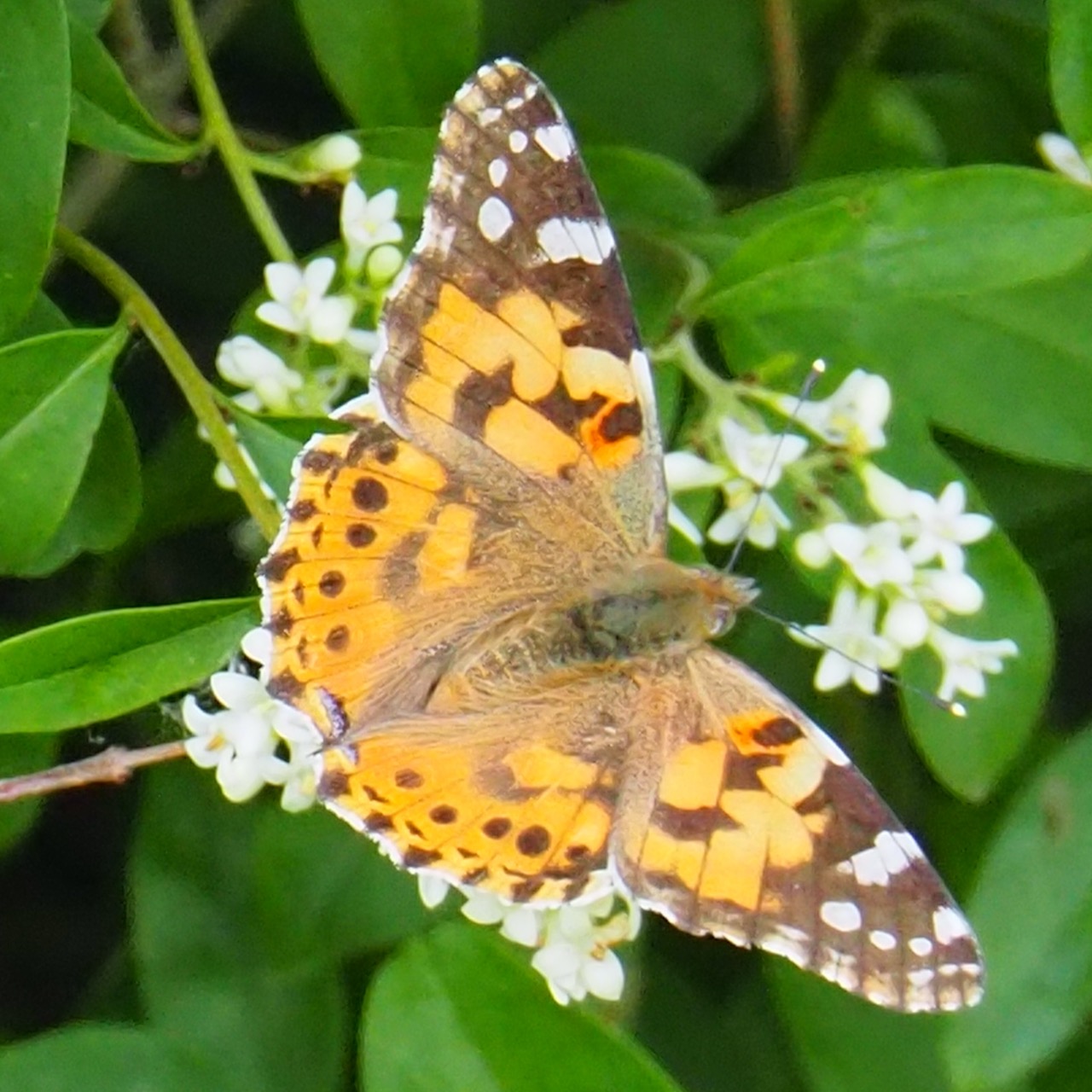 A considerable amount of research has been carried out with painted ladies. They can fly at altitudes of up to 1200 metres, and it’s been estimated that they can reach a speed of 100km/hr with a strong following wind. It has been shown that they cross the Sahara – a journey of 1600km – northwards in spring and southwards in the autumn. In spring I regularly find groups on the cliffs of Catalonian France, refuelling after having in all likelihood crossed the Mediterranean from Algeria.
It is therefore quite possible that some of our visitors have flown all the way from north Africa or southern Europe, though others may be second generation butterflies born nearer to us in France, and those later in the summer may well have been born here from earlier migrants.
 Both clouded yellows and painted ladies are ‘continuously brooded’ which means that in Africa and the Mediterranean they can breed all year round, and migration is partly triggered by growing populations. However it also means that they cannot hibernate and Peter Eeles writes that ‘It is a sad fact that such a spectacle is typically followed by a paucity of records the following year, confirming that [they] are largely unable to survive our winter’*.
Here is a short video of the clouded yellows close to Nine Wells:
*Peter Eeles (2019) Life cycles of British and Irish butterflies. Pisces Publications – a wonderful book for anyone with a love of butterflies