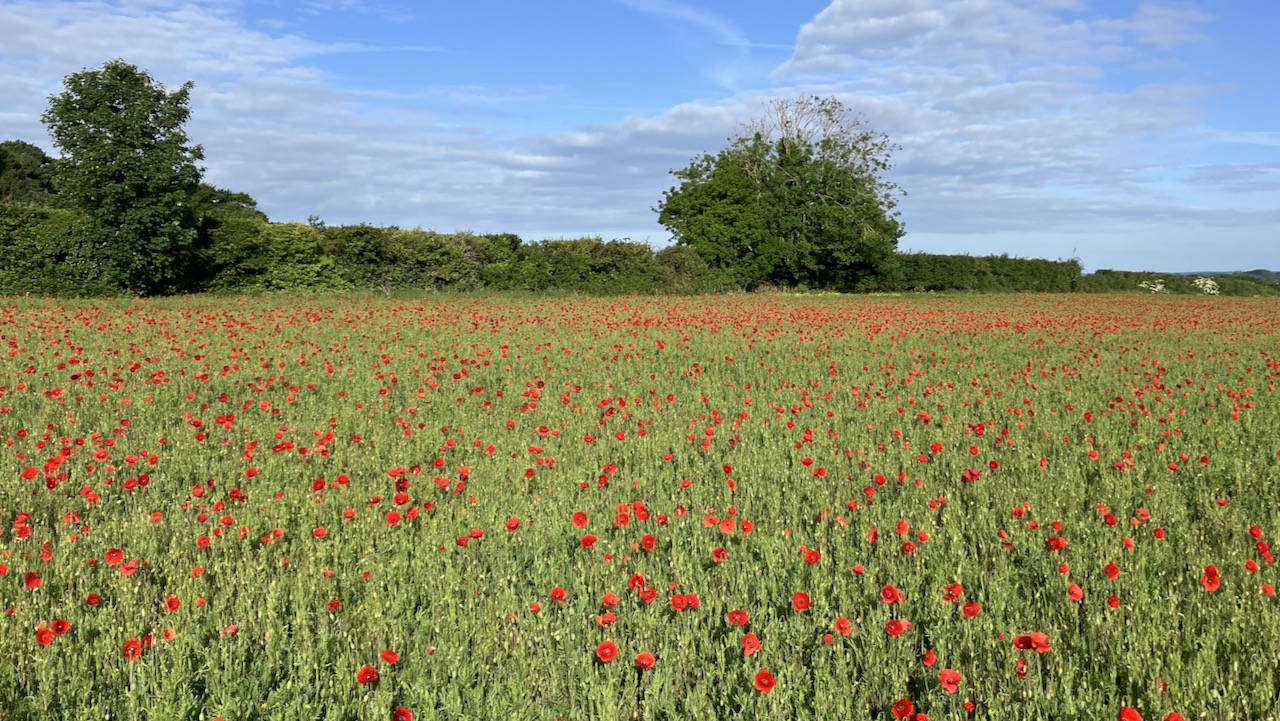
The government is proposing a new Planning and Infrastructure Bill designed to ‘speed up and streamline the delivery of new homes and critical infrastructure’. The Bill, and in particular Part 3: Development and nature recovery, has provoked an outcry among environmentalists. Beccy Speight, RSPB Chief Executive, has stated that ‘the Bill in its current form will rip the heart out of environmental protections and risks sending nature further into freefall’. The Wildlife Trusts have called on the UK Government to ‘completely remove the section of the Bill (Part 3) that threatens nature’s recovery’. And in an open letter to the Government 40 experts have called the Bill a ‘licence to kill nature’.
 I have examined the Bill from the perspective of places like my study area around Nine Wells, and am sending the letter below to Rachel Reeves, Chancellor of the Exchequer, and an edited version to Angela Rayner, Secretary of State for Housing, Communities and Local Government. I urge others to write to your MP – there’s also a template letter on the Wildlife Trust page.
Dear Rachel Reeves
For the last thirteen years I have been carrying out an ecological study of a square kilometre of arable land immediately south of Cambridge, bordered by Addenbrookes Hospital and the Cambridge Biomedical Campus. My study shows that the area is home to remarkable populations of threatened farmland birds, and I attach my most recent report. It provides a valuable case study for assessing the proposed Planning and Infrastructure Bill, and most specifically the impact of Part 3: Development and nature recovery on biodiversity.
When you visited Discovery Drive last November, it is unlikely that anybody told you that in 2016 it had been an arable field hosting a lek of grey partridges; indeed on February 11th of that year I recorded nine pairs on this field alone, with two other pairs very close by. Grey partridge, iconic farmland birds, declined by 93% between 1970 and 2018 and have recently been classified as ‘vulnerable to extinction’ in the UK, along with one in six of all our wild species.
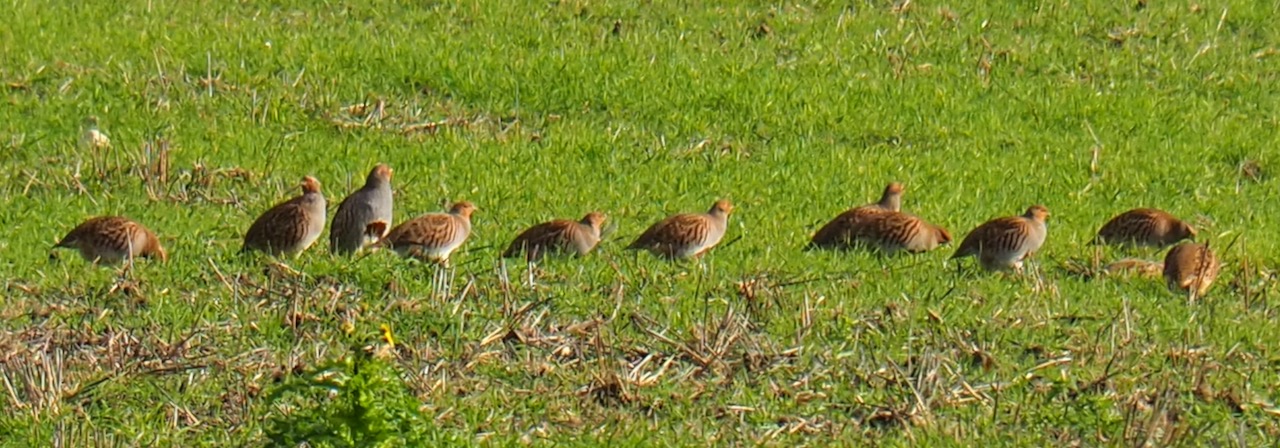
Across the square kilometre I have recorded 12-18 pairs of grey partridge each spring and up to 90 birds in the autumn over the last thirteen years; this is an exceptional population matched only in areas with high levels of conservation management targeted at the species. I also record 8–11 corn bunting territories, another species that has declined by 89% and is ’near threatened’ – there are now just 11,000 pairs in the UK and their recent extinction in Ireland is being repeated in large parts of Britain. In addition there are over 50 pairs of skylarks, around 15 pairs of linnets and yellowhammers, and 1–3 pairs of yellow wagtails, all red-listed birds of high conservation concern, together with water voles, 20 brown hares and a wide range of butterflies, dragonflies and other invertebrates (see Note 1).
My study area is under considerable pressure from development and as such provides a useful case study for anyone considering changes to biodiversity protection.
- Firstly, it is a pocket of biodiversity with a variety of habitats, unlike neighbouring fields which support much less farmland wildlife. Legislation for nature recovery should help areas richer in biodiversity to expand and join up with other areas.
- Secondly, existing legislation has been insufficient to prevent loss of habitat or sufficient mitigation (see Note 2) and this is forcing threatened species into an ever-reducing area, placing them at greater risk.
- Thirdly, while I am able to work constructively with the local councils, landowners and the Biomedical Campus to suggest initiatives that will benefit wildlife, changes in legislation could very easily provide additional incentives for such initiatives (see Note 3).
So will Part 3 of the Planning and Infrastructure Bill as envisaged increase or reduce protection for pockets of biodiversity like this?
- Already the habitat surveys carried out for developers too often underestimate biodiversity (see Note 4). The proposed Nature Restoration Fund will exacerbate this, as it will allow landowners and developers to ‘no longer be required to undertake their own assessments’, and this can only result in further underestimations of existing biodiversity. It will instead allow them to pay a Nature Restoration Levy for habitat improvement elsewhere ‘on a protected site or species’, pushing existing wildlife in places like my study area further down the road to extinction.
- The Nature Restoration Fund carries an additional risk. By speeding development and directing funding into protected sites, it will speed a process whereby the places we live and work are increasingly isolated and divorced from nature reserves. But my study area demonstrates that this process is not inevitable – the area is used extensively by local residents for exercise, leisure and relaxation, and furthermore most people arrive on foot or by bicycle. And the area is also a valuable example of how enlightened land management can safeguard biodiversity while providing employment and remaining profitable.
- The Bill repeatedly argues that, under existing legislation, wildlife gets in the way of construction. The Guide to the Bill states that development ‘is being blocked where specific mitigation measures are not readily available’, ‘development is often delayed until sufficient mitigation is put in place’ and this ‘can slow housing delivery, with accompanying burdens on developers’. However in my study area this is clearly not the case – the habitat surveys I encounter are quite incapable of ‘blocking’ or even ‘delaying’ development. Statements like these suggest that the Bill’s wish to ‘facilitate faster delivery of housing across England’ is a far higher priority than ‘supporting nature recovery’.
My study area underlines how it is not just large protected sites that need protection and enhancement; there are many smaller patches across the country that provide hope for biodiversity, but which risk being placed under greater threat through ill-judged legislation. The UK is already one of the most nature depleted countries in the world. If the government is genuinely committed to supporting nature recovery and halting extinction, Part 3 of the Bill and the proposed Nature Restoration Fund need fundamental rethinking to ensure that existing protections of nature will not be weakened, and that the wildlife in areas like the one I study will not be sacrificed in the interests of an over-optimistic ‘holistic view’.
Please let me know if I can be of any further assistance. I shall look forward to hearing from you.
Yours sincerely
John Meed, Researcher and Writer